
As an Amazon Associate I earn from qualifying purchases
Plants vs. Zombies: Replanted Review
A classic blooms again——or does it?.
Plants vs. Zombies has always been one of my favorite games. Back in the 2010s, I played it endlessly on my phone and later bought it on nearly every device I owned. So when a current-gen remaster was announced this year, it immediately shot to the top of my most-anticipated list.
Back in 2009, the original release was a masterpiece. But with the remaster finally out, the big questions are: What makes this game so special? And more importantly—is this version worth playing?
Background
The original Plants vs. Zombies debuted on PC back in 2009 and was later ported to nearly every platform imaginable. Over the years, each version offered something unique—whether new modes, minigames, or interface tweaks tailored to its hardware.
However, one of the long-running issues with this series is that every new release introduced new game modes that were never reintegrated into the original game. In some cases, later ports even lost features or enhancements that earlier versions had. For example, the (paid links) PS3 and Xbox 360 editions added fun multiplayer modes, but those never appeared on PC or mobile. As a result, no single release has ever truly felt like the “complete” version of Plants vs. Zombies.
What’s New in Replanted?
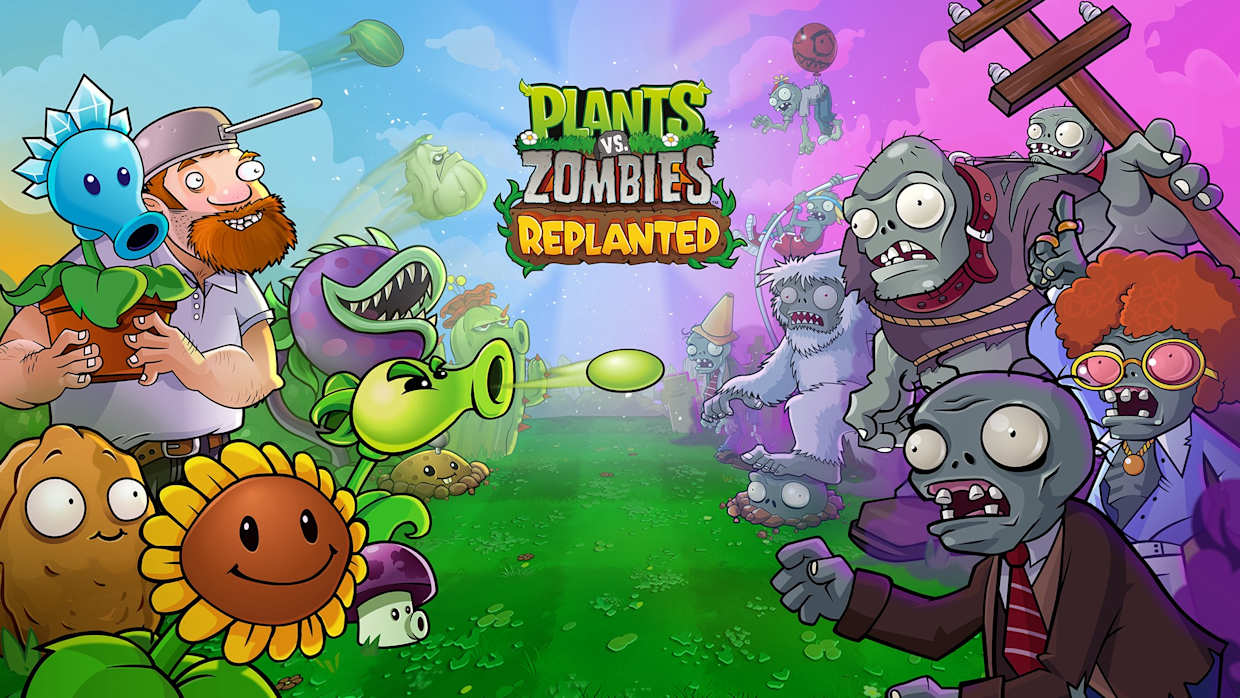
Replanted brings some visual upgrades, including redrawn HD assets, widescreen support, and AI-upscaled graphics. It also consolidates most of the original game’s cut content while introducing two new modes:
Permadeath Mode – where one mistake can end your run.
Cloudy Day Mode – a tougher challenge with limited sun generation.
The standout addition, though, is the new fast-forward feature, which speeds up gameplay and can even add an extra layer of challenge.
Gameplay
At its core, Plants vs. Zombies is a tower defense game where you strategically place plants to stop waves of zombies. Its brilliance lies in its balance of simplicity and depth.
You build your defenses on a grid—mixing offensive plants that fire projectiles, defensive walls that stall zombies, and support plants that generate sun or control enemy movement.
While there’s no single “correct” strategy, the game clearly encourages building a strong sun economy early on. Having more sun gives you flexibility, letting you pivot between different tactics as each wave intensifies. With dozens of plants and creative mini-challenges, the gameplay remains endlessly engaging even after all these years.
How Is Replanted?
One of the reasons Plants vs. Zombies became a phenomenon was its pick-up-and-play charm—you can enjoy it for hours or just a few minutes. Replanted keeps that magic intact, now in 4K resolution.
However, like the original release the main campaign remains unchanged, lasting roughly five hours. The real longevity comes from the 30–40 hours of mini-games and side activities.
That said, this is where Replanted feels inconsistent. While it successfully brings together about 90% of past content, it still isn’t a true definitive edition. Some modes remain locked on the (paid link) DS version, and the ones that did make it over haven’t been improved. Much of it feels copy-pasted, which has fueled a fair share of controversy.
Controversy
Unfortunately, Replanted launched in rough shape. It’s riddled with bugs and technical issues—ranging from game-breaking glitches to baffling oversights. In co-op, Player Two can accidentally take over Player One’s controls. On the Switch 2 version, mouse mode barely works, and even basic touch input feels broken. These aren’t obscure bugs; they’re problems that should’ve been caught within hours of testing.
Worse yet, none of the original development team was brought back. As a result, many authentic details were lost: the dynamic music, certain animations, even some artwork and sound effects are missing or replaced with incorrect versions. It’s the kind of sloppiness you get when a game is outsourced to a team unfamiliar with the source material. They often handle the project with surface level insight without proper guidance.
It’s hard to shake the feeling that EA just wanted a quick cash grab, putting in minimal effort to push the game onto modern platforms—and it shows.
Conclusion
Even after 15 years, Plants vs. Zombies remains a fantastic game. Beneath the messy port lies the same fun, addictive experience that made the original so special. If all you want is a convenient way to replay the classic on modern hardware, Replanted does the job—bugs and all.
But if you expected a true remaster or definitive edition, you’ll be disappointed. It’s a flawed, incomplete release that would need a serious overhaul to live up to its name.
If you don’t have access to older versions like the Xbox 360, PS3, or Steam Game of the Year Edition, Replanted is a serviceable option. However, if you’re a die-hard fan, the Steam GOY version remains the best way to play—more authentic, stable, and supported by a thriving modding community that continues to expand the game’s potential.
In short: Replanted is fine for nostalgia—but far from the definitive way to experience this classic.

Your friendly neighborhood nerd with a passion for games, anime and New York Yankees
Leave a Reply