
As an Amazon Associate I earn from qualifying purchases
Star Fox 2026 is a remake of the 3DS remake, which itself was a remake of the Nintendo 64 version, which was essentially a remake of the original SNES game.
…Does Nintendo ever make a new Star Fox game?
And no, Star Fox Zero doesn’t count lol
Joking aside, with yet another revisit to Corneria, is this simply the same game we’ve been playing for nearly 30 years, or does it bring enough to the table to justify another trip? As someone who’s never been particularly invested in the franchise, did this finally win me over?
Let’s find out.
Overview
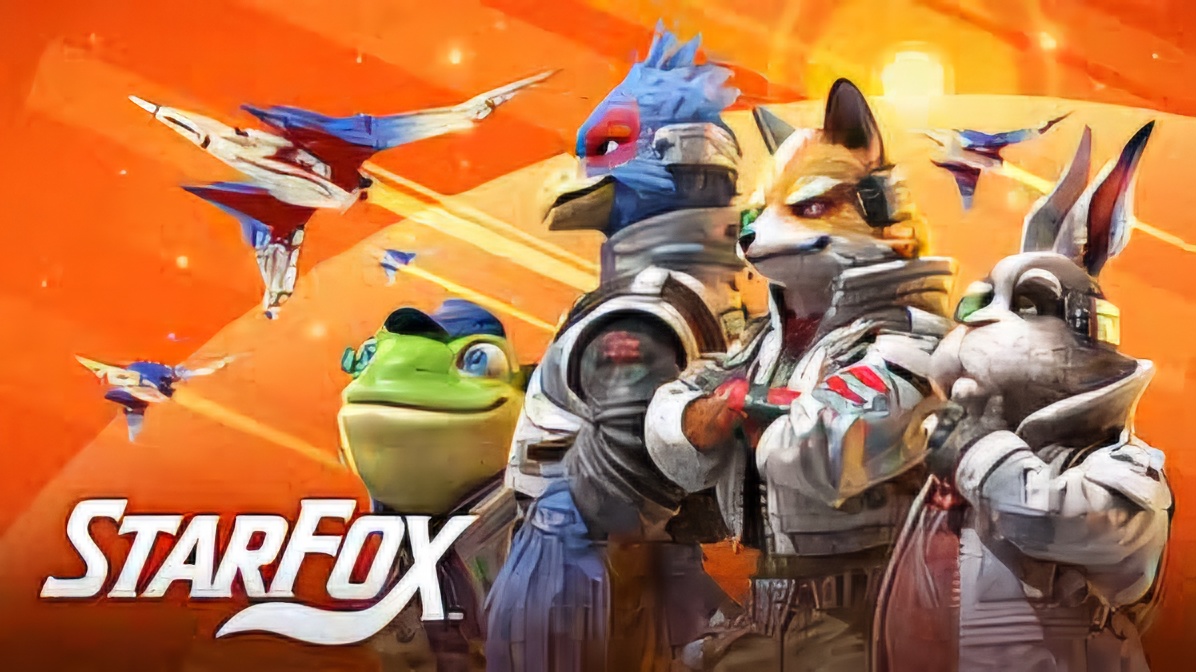
Star Fox hardly needs an introduction. It’s one of Nintendo’s most recognizable on-rails arcade shooters, starring a cast of anthropomorphic pilots flying through space.
The story remains largely unchanged from the Nintendo 64 version. Andross is threatening the Lylat System once again, and it’s up to Fox McCloud and his team to stop him.
As before, your performance determines the routes you’ll unlock. High scores and medals open alternate paths, eventually leading to either the standard or true ending. The fun comes from replaying the campaign, improving your performance, and discovering every route—not from the story itself.
It’s really just an excuse to fly around and blow things up.
The biggest narrative additions are a fully animated prologue replacing the classic Star Wars-style opening crawl, along with several new cutscenes that flesh out the presentation a bit more.
Gameplay
If you’ve played the Nintendo 64 or 3DS versions, you’ll immediately feel at home. Mechanically, very little has changed.
Your Arwing still comes equipped with lasers, bombs, and—most importantly—charge shots.
Seriously…charge shots.
Charge shots are the key to racking up high scores, so you’ll be using them constantly.
Most of the changes come in the form of quality-of-life improvements rather than gameplay overhauls.
Restarting a mission no longer costs a life, and you retain every upgrade you’ve collected before restarting. The game also replenishes your bomb supply back to three, making retries much less frustrating.
There are several smaller improvements as well. Friendly ships are much easier to distinguish from enemies during hectic battles, making combat far less confusing.
As for your wingmen…
They’re still mostly useless. They serve more as an obstacle than help. I almost prefer to shoot them down if didn’t cost me the high score medal for completing the level.
If they received any AI improvements, they’re subtle. I still found myself rescuing them far more often than they ever helped me.
One change I actually dislike is the removal of the boss hit flash. Previous versions briefly flashed the weak point whenever you landed a successful hit. Without that visual feedback, it can be difficult during the harder challenges to know whether your attacks are actually connecting without constantly checking the boss’s health bar.
Mission selection also remains oddly restrictive.
While Challenge Mode lets you replay individual stages, the main campaign still doesn’t allow you to jump directly to missions you’ve already completed. If you miss a medal on a late-game stage, you’re forced to replay the same earlier levels just to reach it. That’s a design decision that felt dated in 1997 and still feels dated today.
My final complaint involves unlocking Titania.
Accessing the stage requires intentionally allowing one of your teammates to be shot down during a previous mission. Without looking up a guide, you’d probably never discover this naturally because the boss is easy enough to defeat before the required event even has time to occur.
I would have preferred the opposite approach: have the teammate arrive earlier and get his cheeks blasted, while rewarding skilled players who defeat the boss quickly with the alternate route. It was an awkward requirement in the original, and I think this remake missed an opportunity to improve it.
Controls
The controls feel excellent.
I still prefer the original Nintendo 64 control layout, but the modern scheme works well and never feels like you’re fighting against the game.
If I had to nitpick, it’d be the Landmaster sections. Shooting enemies positioned above you can occasionally be awkward because you’re also dealing with uneven terrain.
That’s less of a control issue and more of a level design challenge, though.
Presentation
Visually, this is one of the best-looking games on Switch 2.
The environments are vibrant, richly detailed, and packed with impressive texture work. Even though the game reportedly renders around 1080p rather than native 4K, the image quality is remarkably clean. Whether that’s due to downsampling or reconstruction techniques, the end result is genuinely impressive.
Perhaps even more impressive is the performance.
The game runs at a rock-solid 60 FPS with no noticeable frame drops. Going back to the Nintendo 64 version reminded me just how often that game slowed down during intense moments. Here, everything feels smooth from beginning to end.
The only visual inconsistency comes during the cinematics.
The cutscenes run at a noticeably lower frame rate than gameplay, and the more realistic character models occasionally drift into uncanny valley territory.
Unfortunately, that doesn’t help the weakest aspect of the presentation:
The voice acting.
It’s not bad in the sense of an old low-budget English anime dub or unintentionally hilarious voice work.
It’s simply…flat.
Most of the performances lack energy, almost as if the actors were told to read their lines without much direction. The dialogue is delivered competently, but rarely memorably.
The older games leaned into their cheesiness, giving us plenty of iconic one-liners that fans still quote today.
This remake aims for a more serious tone, but loses some of that charm in the process.
I’m not asking for over-the-top anime performances. I simply wanted a bit more personality from the cast.
Comparison to Previous Releases
Because Nintendo insists on reusing the same title every time, I’ll simply refer to each version by its platform.
SNES
The original (paid link) SNES release deserves credit for laying the foundation, but it has aged considerably.
Rather than comparing it directly, I’d view it as an interesting prototype of what Star Fox eventually became.
Nintendo 64
The Switch 2 version is unquestionably superior from a technical standpoint.
Visuals are dramatically improved, gameplay feels smoother, and the added quality-of-life changes make replaying far less frustrating.
However, something was lost along the way.
The (paid link) Nintendo 64 version had a quirky personality that gave it its identity. The exaggerated voice acting, memorable dialogue, and stylized presentation made it feel unmistakably Star Fox.
The Switch 2 version feels noticeably more cinematic—almost closer to Star Wars than classic Star Fox.
That isn’t necessarily a bad thing, but longtime fans may miss some of the original’s charm.
Despite that, I’d still choose the (paid link) Switch 2 version as my preferred way to play.
3DS
This is the comparison I found the most interesting.
Before this remake was announced, I actually hoped Nintendo would simply remaster the excellent (paid link) 3DS version.
Many of the improvements I wanted—clearer visuals, better ally visibility, expanded Challenge Mode, and small quality-of-life features—are all present here.
Yet despite sharing nearly identical gameplay, the two versions somehow feel surprisingly different.
The lighting, color palette, atmosphere, and overall presentation give each game its own identity.
The biggest area where I still prefer the 3DS version is the voice acting.
It retains much of the original charm while cleaning up the compressed Nintendo 64 audio, giving the performances far more personality than the Switch 2 remake.
Overall, I don’t think either version completely replaces the other.
Each has strengths the other lacks, making them complementary rather than definitive.
Conclusion
I really enjoyed Star Fox 2026.
For newcomers, it’s an easy recommendation and one of the standout experiences currently available on Switch 2.
The biggest hurdle for some players will be its length. Even with multiple routes and Challenge Mode, you’re looking at roughly 15–20 hours to see everything unless you spend significant time in multiplayer—which itself feels fairly limited.
This isn’t a game designed around a massive campaign.
It’s built around replayability.
You’ll improve your scores, unlock new routes, chase medals, and tackle increasingly difficult challenges.
Whether that’s enough to justify the $50–60 price tag depends on how much you enjoy replaying arcade-style games.
Personally, I think it’s worth it.
It also seems to be performing reasonably well commercially, and I wouldn’t be surprised if Nintendo eventually bundled it with the (paid link) Switch 2. A holiday package including (paid link) Mario Kart World, Star Fox 2026, and (paid link) Splatoon Raiders would make for an excellent introduction to the system by showcasing three completely different styles of gameplay.
Final Score: 8.5/10
Verdict:
A beautiful remake that modernizes one of Nintendo’s arcade classics while preserving its replayable core. It may not reinvent the series, but it’s easily one of the strongest showcases for what the Switch 2 can do—and hopefully, it’ll inspire players to revisit (or discover) the earlier versions as well.

Your friendly neighborhood nerd with a passion for games, anime and New York Yankees
Leave a Reply